 India is building. Fast. And if you’ve spent any time near a live infrastructure project recently, you can feel it on the ground. New specs, tighter timelines, more demanding clients, bigger tenders. The pace is real.
We’ve been in this industry for years. Road over bridge (ROB) construction, railway station builds, earthworks, civil works across Maharashtra and other states. So when we say 2026 feels different, it’s not just talk. Here are the ten trends actually shaping how India builds right now.
1. Prefabrication is the New Normal
A few years ago, prefab was the word people tossed around at industry events and then quietly shelved when the actual project started. That era is done.
If you’re building a foot over bridge (FOB) or a road over bridge (ROB) today and casting everything on-site, you’re probably behind schedule before the foundations are even poured. Prefabricated girders, precast deck slabs, modular station components. These are showing up on real projects now, not just pilot programmes.
The speed advantage is obvious. But the quality consistency is just as valuable. When elements are produced in a controlled factory setting, you cut out a lot of the variability that site conditions bring in. Rain, labour inconsistency, material delivery gaps. For top construction companies in Mumbai juggling multiple projects at once, that reliability matters a great deal.

2. Green Construction Has Real Teeth Now
Sustainability stopped being a checkbox somewhere around 2024. It’s now written into tender documents and evaluated during project award. Clients (especially government bodies) want to see it in your methodology from day one.
Railway station construction is where this is most visible. Solar panels on station rooftops. LED lighting across platforms. Better stormwater management built into earthworks design from the start. Indian Railways and several state-level transport bodies have been explicit about requiring these features in new builds.
For civil works contractors, this means two things: finding material suppliers who can deliver on green specs consistently, and having site engineers who actually understand what those specs mean in practice. Knowing the requirement and knowing how to meet it are different things.
3. ROB Projects Are Everywhere
The government’s drive to eliminate unmanned level crossings has created a steady pipeline of road over bridge (ROB) projects across the country. This has been building for years, but in 2026 the volume of active ROB tenders is at a level we haven’t seen before.
ROB construction is not simple work. You’re usually operating directly above active railway tracks. That means strict clearances from railway authorities, foundation work coordinated around live train schedules, and traffic management on both sides of the structure at the same time.
Civil works contractors who have built real experience in this space (and already hold the necessary railway clearances) are in short supply. Given the project volumes coming through, that’s not changing any time soon.
4. The FOB Upgrade Wave
Anyone who’s used a foot over bridge (FOB) at a busy Indian station knows the experience can range from functional to genuinely unsafe. Old structures, massive daily passenger loads, years of deferred maintenance. Something had to give.
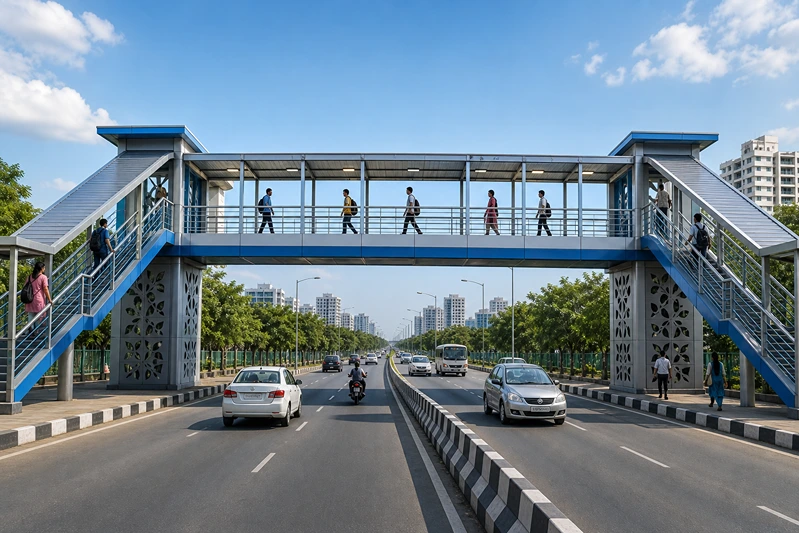
New FOB projects in 2026 are being designed to a completely different standard. Wider walkways. Proper lighting. Accessibility ramps that actually work. More durable surface finishes. Some are being built with steel-concrete composites that are significantly easier to maintain over a 20 to 30 year lifecycle.
There’s also growing preference for modular FOB systems, where sections are prefabricated and installed with minimal disruption to train operations. That’s a real improvement over the older method of shutting down platforms mid-construction.
5. Mumbai's Construction Boom is Unlike Anything We've Seen
The scale of what’s happening in Mumbai right now is worth paying attention to. Metro expansions. Station redevelopment under the Amrit Bharat scheme. The coastal road project. Urban transport upgrades. These are not running one after another. They’re all active at the same time.
Top construction companies in Mumbai are genuinely stretched. That creates real opportunity for experienced civil works contractors who know how to operate in dense urban environments.
Working in Mumbai is its own skill set. Underground utilities you find only when you hit them. Construction traffic through localities that never fully clear. Coordination with BMC, railways, traffic police, and resident welfare associations running in parallel. Contractors who’ve worked out how to manage all of that efficiently are genuinely hard to find.
6. Railway Station Construction is Being Completely Rethought
The Amrit Bharat Station Scheme is the biggest shift in Indian railway station construction in decades. Over 1,300 stations being redeveloped. New design standards. Expanded commercial areas. Proper accessibility. Better passenger flow.
For any railroad engineer or railway station construction contractor, this scheme represents a multi-year pipeline. But the expectations have shifted significantly. Stations are no longer just platforms with a waiting room. They’re being designed as multi-modal civic spaces that connect with metro systems, bus terminals, and local urban transit.
The technical scope has expanded too. Fire safety compliance, accessibility codes, accommodation for different train types, higher passenger volumes. Clients want contractors who can read complex specifications and execute them accurately, not just pour concrete and move on.
7. Earthworks Are Getting Smarter
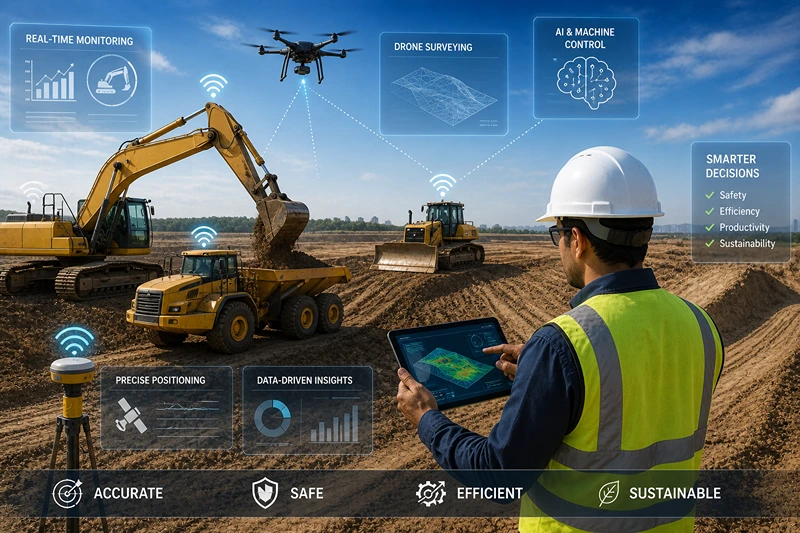
Earthworks look basic from the outside but are quietly becoming more technical. GPS-guided machinery, real-time soil compaction monitoring, digital quality documentation. These are showing up on serious railway and infrastructure projects across India now.
For railway construction in particular, earthworks precision matters a lot. Track geometry depends on the subgrade being prepared correctly. A rushed earthworks job does not just delay the project. It creates operational and safety issues that can persist for years after the structure is handed over.
Contractors who invest in proper equipment and the expertise to use it correctly are finding it’s a genuine differentiator. Project managers on the client side can tell the difference between a contractor who takes earthworks seriously and one who does not.
8. Safety is Actually Being Enforced
This should have come sooner, but the enforcement of construction safety standards in India is genuinely tightening. Site inspections are more frequent. Penalties for violations are more consistent. Large clients, including railway authorities, NHAI, and state PWDs, are including safety track records in tender evaluation.
PPE, fall protection, proper scaffolding, safe excavation practice near live railway infrastructure. These are not optional on a well-run site anymore. And that is good for the industry overall. It makes it harder to compete purely by cutting safety corners.
For companies that have always maintained high standards, this shift helps level the playing field. The race to the bottom on safety costs gets a lot harder when enforcement is real and consistent.
9. Technology is Walking Onto the Site
BIM (Building Information Modelling) is moving from exception to expectation on large infrastructure tenders. Drone surveys for site progress mapping. Digital project management for real-time scheduling. Structured quality documentation replacing paper registers.
For ROB and FOB construction near live railway lines, BIM is genuinely useful beyond being a client requirement. Clash detection in 3D before site work begins saves costly rework when you’re operating in close proximity to existing railway infrastructure.
Most contractors are still in the early stages of adoption. But the direction is clear. Projects with digital delivery requirements are becoming more common, and the gap between contractors who have built this capability and those who have not is going to widen.
10. The Talent Problem Nobody Wants to Talk About
Here’s the one that does not show up in industry reports but comes up in every serious conversation: there are not enough skilled people to handle the volume of work. Civil engineers with railway experience. Good project managers. Site supervisors who know what they are doing on a complex ROB or railway station site. Demand is running well ahead of supply.
For a railroad engineer or civil specialist with real site experience, this is a good time to be in the market. For construction companies, it means getting serious about training, retention, and reputation as an employer.
The contractors who define India’s infrastructure over the next decade are not just the ones with the biggest equipment fleets or the most aggressive pricing. They are the ones building and keeping teams that can execute complex work well, consistently, across projects.
Wrapping Up
India’s infrastructure pipeline is real, and so is the complexity of delivering it. Whether it’s a road over bridge (ROB) above an active rail corridor, a new foot over bridge (FOB) serving thousands of commuters every day, a full railway station construction project, or precision earthworks for a new rail yard, the bar is higher than it used to be. Clients know it, and so do we.
The contractors who figure out how to work at that level, technically, logistically, from a safety and documentation standpoint, are the ones who will shape what India’s infrastructure looks like in the years ahead.
At GIRIRAJ Civil Developers Limited, this is the work we do. If you’re looking for a civil works contractor or railway construction partner who understands what it actually takes to deliver on complex projects, we’d be glad to talk.